One of the conversations I’m having more often with HR professionals is about employee fatigue.
Teams are feeling tired. Concentration is dropping. Productivity dips during the afternoon, and many employees are reaching for another coffee just to get through the day.
Of course, there are many reasons why people feel tired at work. Heavy workloads, demanding roles, poor sleep and the pressures of everyday life all play a part.
But there’s another piece of the puzzle that is often overlooked.
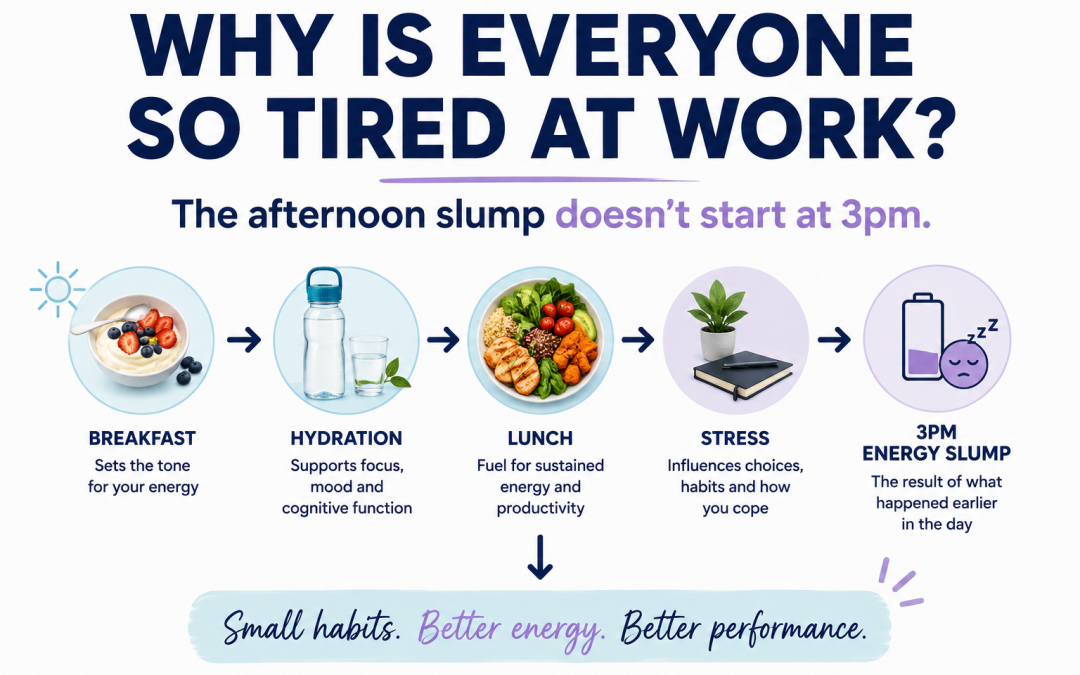
The afternoon slump doesn’t start at 3pm. It starts with the habits that shape our energy from the moment the day begins.
As a Nutritional Therapist specialising in workplace wellbeing, I often encourage employees to look earlier in the day. The choices we make at breakfast, lunch and throughout the morning have a significant impact on how we feel by mid-afternoon.
Employers can’t solve workplace wellbeing alone, and employees can’t either. It has to be a joint effort. Organisations can create a culture that supports wellbeing, while employees need the knowledge and confidence to make choices that support their own health and energy.
That’s why I believe practical wellbeing education is so important.
-
Breakfast sets the tone for the day
I’ve lost count of the number of people who tell me they only have time for a coffee before work.
It feels like a time-saver, but by mid-afternoon they’re struggling to concentrate, craving sugary snacks or relying on more caffeine to keep going.
A breakfast that includes protein and fibre helps provide more sustained energy, making it easier to stay focused throughout the morning and into the afternoon.
-
Lunch is fuel, not an inconvenience
When workloads increase, lunch is often the first thing to suffer.
Employees eat at their desks, grab something on the go or skip lunch altogether.
It’s easy to see this as being productive, but without the right fuel, energy and concentration naturally begin to decline.
Encouraging people to take a proper lunch break and make balanced food choices isn’t about perfection. It’s about giving their body and brain what they need to function well.
-
Hydration matters more than many people realise
Even mild dehydration can leave us feeling tired, unfocused and less productive.
Many employees move from meeting to meeting with plenty of coffee but very little water.
It’s a simple habit, yet one that can make a noticeable difference to energy and mental clarity.
-
Stress influences our daily choices
When we’re under pressure, healthy habits are often the first to disappear.
We eat quickly, skip meals, drink more caffeine and spend the whole day sitting down.
This isn’t because people don’t care about their health. It’s because they’re trying to cope with a busy day.
Helping employees recognise these patterns is often the first step towards making realistic, sustainable changes.
This is one of the topics I explore in my workplace wellbeing talks and Lunch and Learn sessions, helping employees understand how small, sustainable habits can improve their energy, focus and wellbeing throughout the working day.
-
Small changes can have a big impact
When people hear the words ‘healthy lifestyle’, they often think they need to change everything.
They don’t.
The biggest improvements usually come from small, consistent habits, eating a balanced breakfast, having a nourishing lunch, drinking enough water and taking a few minutes away from the desk.
These aren’t complicated solutions, but they can make a real difference to how people feel and perform.
The takeaway
When organisations talk about workplace fatigue, it’s easy to focus on what happens during the afternoon.
I believe we need to start the conversation much earlier.
The afternoon slump doesn’t start at 3pm. It starts with the habits that shape our energy from the moment the day begins.
Employers can’t solve workplace wellbeing alone, and employees can’t either.
Organisations can create a culture that supports wellbeing, while employees need the knowledge and practical strategies to make choices that support their energy, focus and overall health.
When both come together, the benefits are felt by everyone.
If we want a healthier, more energised and productive workforce, we need to look beyond the afternoon slump and start with the habits that shape the day.
Ready to support your team’s wellbeing?
If employee fatigue, poor concentration and afternoon energy dips are challenges you’re seeing in your organisation, I’d love to help.
My workplace wellbeing talks and Lunch and Learn sessions give employees practical, evidence-informed strategies they can apply straight away to support better energy, focus and wellbeing.